
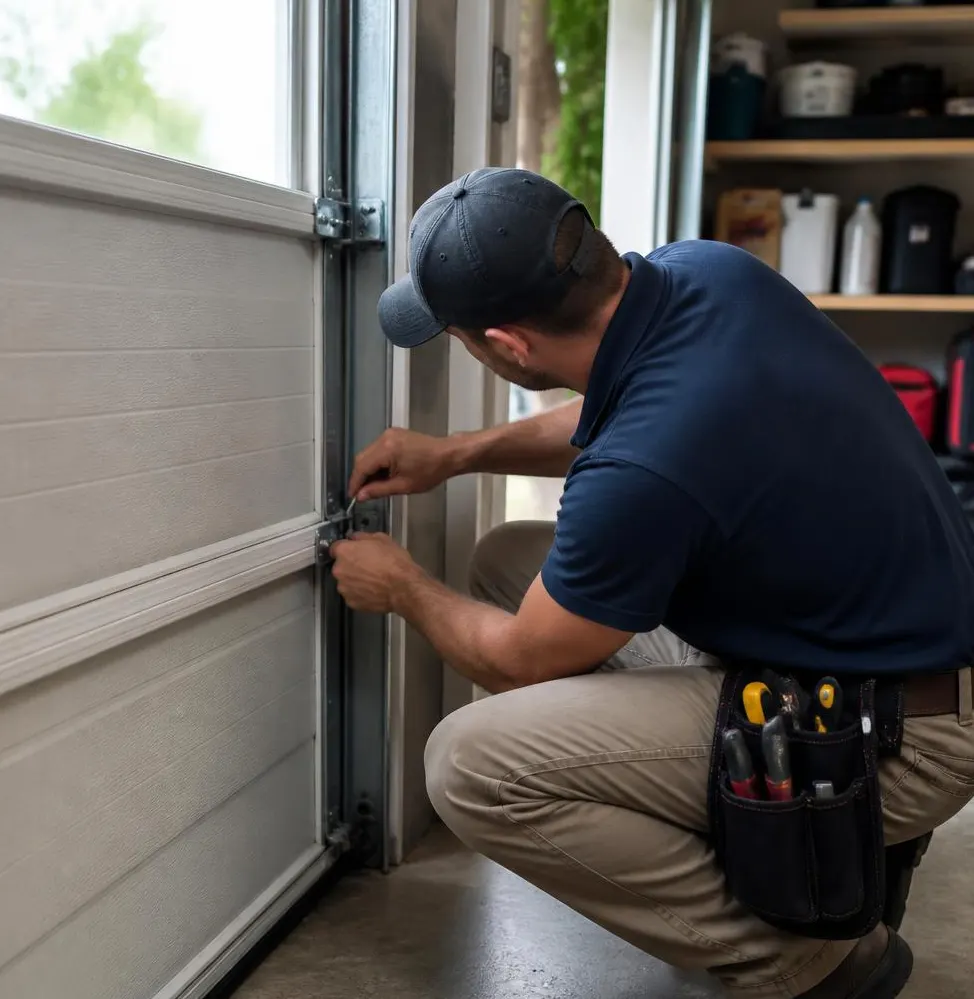
What a Technician Sees This Time of Year
Come November and December, the service calls change character. A homeowner who's been away for a few months pulls back into the driveway, hits the opener, and the door groans, jerks, or stalls halfway up. Someone else notices their door suddenly feels "looser" in its tracks, or a weatherstrip that sealed tight all summer is now letting in a sliver of daylight. None of this is random. After months of heat and humidity, Southwest Florida's cooler, drier winter air causes materials to contract, lubricants to behave differently, and hardware that was quietly corroding near the coast to finally announce itself.
Why the Season Change Matters for Your Door
Garage doors in this part of Florida spend summer swelling slightly from moisture and heat, especially wood-composite panels and door frames. When the drier winter air arrives, that same material shrinks back down. The result is gaps around the bottom seal or sides that weren't there in August, drafts of cool night air, and sometimes a door that no longer sits flush against the frame. It's not damage exactly, it's just wood and composite doing what wood and composite do, but left unchecked it lets in dust, pests, and rain that afternoon downpours can still bring even outside hurricane season.
Check the Weatherstripping and Bottom Seal
- Run your hand along the bottom seal and side weatherstripping. If you feel gaps, light coming through, or the rubber has gone stiff and cracked from salt air exposure, it needs replacing.
- A compressed, hardened bottom seal is one of the most common small fixes that homeowners put off for years, and it's one of the cheapest to correct.
Re-Lubricate Before, Not After, a Cold Snap Sticks
Summer humidity causes lubricant on rollers, hinges, and the torsion spring to thin out, drip, or collect grit. By winter it's often gummy or gone. Cooler mornings make that worse, a door that moved smoothly in August can suddenly grind or hesitate in a 55-degree morning. Clean off old residue with a rag and apply a silicone-based garage door lubricant to the hinges, rollers, and springs. Avoid heavy grease, which attracts dust and sand carried in on sea breezes.
Inspect Hardware for Salt-Air Corrosion
Rust doesn't take a season off near the coast. Track brackets, hinges, and the spring itself should be checked for orange streaking or pitting. A little surface rust can often be wiped down and treated, but pitted or flaking hardware is a sign the part is weakening from the inside and is worth having inspected before it fails under tension.
Test the Balance and Listen to the Opener
Disconnect the opener and lift the door halfway by hand. It should stay in place. If it drifts up or drops, the spring tension has shifted, which happens naturally as temperatures change and hardware settles. Don't try to adjust torsion springs yourself; they're under enough force to cause serious injury. Also listen for new noises from the opener motor itself, grinding, clicking, or a labored hum, since a motor that worked hard all summer can start showing wear once it's asked to move a door with different material tension.
Clear the Photo-Eye Sensors
As the sun angle drops lower in the sky during the cooler months, direct winter sunlight can hit the safety sensors at a new angle and cause the door to reverse unexpectedly or refuse to close. Wipe both sensor lenses clean and check that nothing has shifted out of alignment, including a stray leaf or spider web from storage.
If the House Will Sit Empty for Part of the Season
Plenty of homes in this area go quiet for stretches when owners travel. Before leaving a garage door unused for weeks:
- Lubricate moving parts beforehand so they don't seize up while sitting still.
- Leave the door closed and, if possible, have someone check on it periodically, idle door openers and seals can still be affected by humidity swings even with no one home.
- Unplug or disable the opener if there's any risk of power surges while the house is unattended, and consider setting a vacation lock on the opener itself.
On the flip side, if you're returning to a home that's been empty, don't assume the door is fine just because it opens. Run it through a full cycle, watch for hesitation, and check the balance before loading the car in and out of it regularly again.
When to Call Placida Garage Door
If your door is sticking in cool mornings, you're seeing daylight around the seals, or the balance test shows the door isn't holding its position, it's time for a tune-up rather than a guessing game. Our Garage Door Maintenance & Tune-Up service covers lubrication, hardware inspection, seal replacement, and balance adjustment in one visit, which is the most efficient way to catch small seasonal issues before they turn into a stuck or off-track door. If you're hearing grinding from the spring assembly or the door won't stay up on its own, that's a job for our Garage Door Spring Repair service, springs under incorrect tension are not something to troubleshoot yourself.
Whether you're closing up the house for a trip or just want the door running smoothly through the cooler months, Placida Garage Door is ready to help homeowners throughout Placida, Englewood, Cape Haze, and the surrounding coastal communities. Call us today to schedule a winter tune-up before small issues turn into a weekend without a working garage door.