
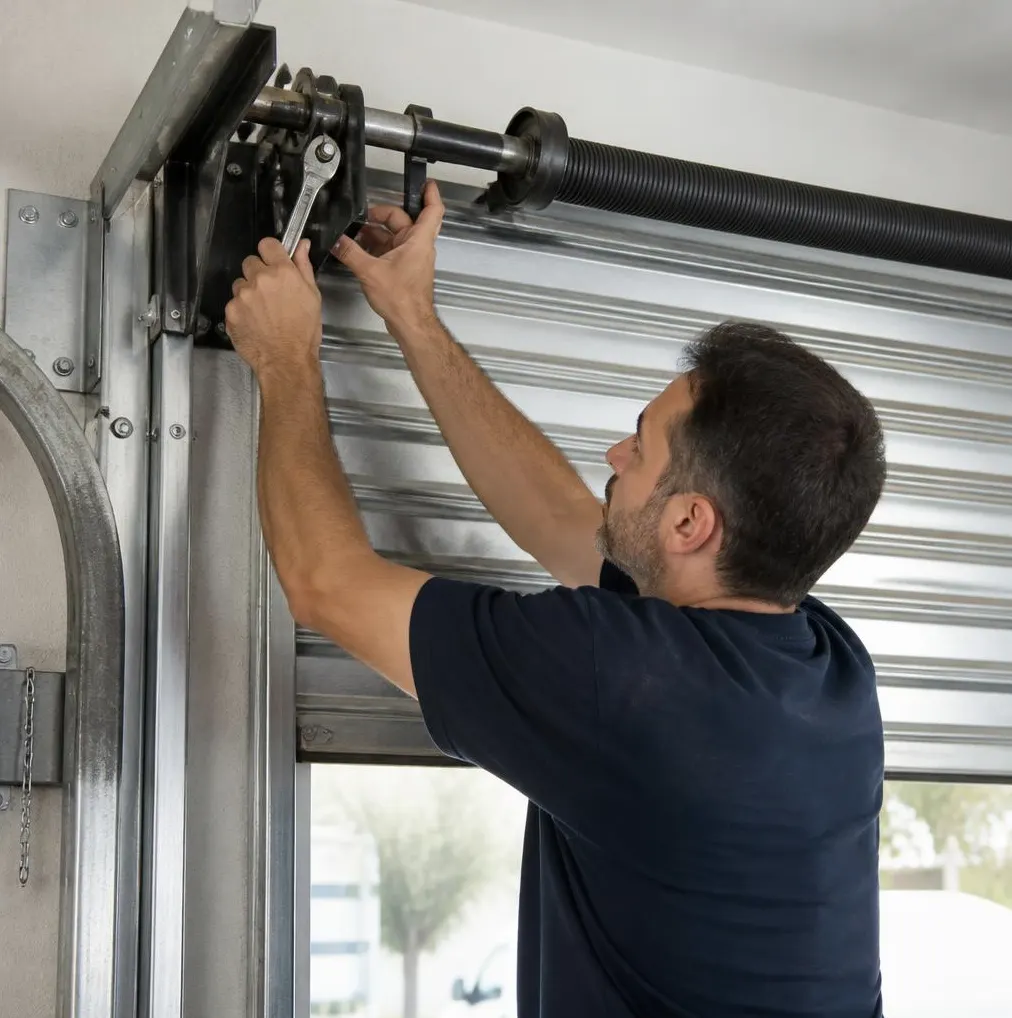
What a Technician Sees After a Windy Week
A typical call this time of year starts the same way: a homeowner noticed the garage door flexing or rattling during a storm, or it won't close evenly the morning after. On site, the pattern is usually one of a few things: a track pulled slightly away from the frame where a wind gust pushed the door outward, a bottom panel with a faint bow in it, rollers that have gone from smooth to gritty because humidity got into the bearings, or hinges and fasteners showing surface rust from salt-laden air. None of these looks dramatic from the driveway. All of them are warning signs that the door was never built, or is no longer able, to handle the pressure a real storm puts on it.
Why the Garage Door Is a Home's Weakest Wall
Every other opening in a house, windows, doors, soffits, is small compared to a garage door. A standard double door is one of the largest unsupported surfaces on the entire structure, and it's hinged, rolled, and held by hardware rather than built into a solid frame. When wind hits a house, pressure doesn't just push, it also pulls, and a door that isn't rated or reinforced for that load can bow inward, buckle, or blow out of its tracks. Once that happens, wind gets inside the garage and pressurizes the whole house from the inside, which is a major reason uplift damage to roofs and gables often traces back to a garage door failure, not a roof failure.
This isn't a once-in-a-decade concern on this stretch of coast. Between the wind-load expectations for homes near open water and the salt air that speeds up corrosion on hardware, a garage door here is working harder, and aging faster, than the same door would in a drier, calmer climate.
What October Weather Actually Does to a Door
Late in hurricane season, the pattern is usually a mix of a few lingering tropical systems plus the daily afternoon downpours that are normal for this part of Florida. That combination is tough on doors in specific ways:
- Swelling and sticking: Wood-composite panels and even some steel doors with insulation can absorb moisture during repeated humid, rainy stretches, causing the door to bind in the tracks or no longer seat flush at the bottom.
- Rust creep: Springs, hinges, and roller stems near the coast corrode faster. A spring with surface rust is weaker than it looks and more likely to snap under the added strain of a storm.
- Track drift: Repeated gusts, even from storms that never reach hurricane strength, can loosen the bolts holding tracks to the frame over a season. A door that was perfectly aligned in June can be a quarter-inch off by October.
- Opener strain: If a door is harder to lift because of swelling or worn rollers, the opener motor works overtime, which shortens its lifespan and increases the odds it fails right when you need it most.
A Practical Pre-Storm Checklist
Before the next system is in the forecast, not during the warning, walk through these checks:
- Inspect the tracks. Look for gaps between the track and the wall bracket, bent sections, or visible rust. Tracks should be straight and firmly anchored.
- Check the panels. Run a hand along the door's surface for warping, bubbling paint (a sign of trapped moisture), or soft spots on composite doors.
- Test the balance. Disconnect the opener and lift the door manually about halfway. It should stay in place. If it drifts up or crashes down, the springs are out of balance and under extra stress.
- Listen to the rollers. Grinding or squealing usually means lost lubrication or pitting from moisture exposure, both of which get worse under wind load.
- Look at the fasteners. Hinges, track bolts, and the bracket holding the opener's arm should be tight and free of heavy rust. Loose hardware is often the first thing to give way in a gust.
- Confirm reinforcement. Doors in wind-prone areas should have horizontal struts or a reinforcement kit rated for the wind pressures this coastline sees. If the door was installed years ago and never upgraded, it's worth having that checked against current wind-load expectations.
- Check the weatherstripping and bottom seal. Cracked or flattened seals let wind-driven rain into the garage during the afternoon downpours that are common right now, which adds to the moisture problem inside.
When to Call Placida Garage Door
If the door is out of balance, the tracks have drifted, or hardware shows real rust rather than surface discoloration, that's past the point of a DIY fix. Our Garage Door Maintenance & Tune-Up service covers exactly this: realigning tracks, lubricating and replacing worn rollers, checking spring tension, and tightening every fastener that's loosened over the season. If a storm has already pushed a panel off its tracks or left the door hanging unevenly, our Off Track Door Repair crew can get it back in working order and flag any reinforcement issues before the next system forms. Either way, we check the whole system, not just the symptom you called about, because in this climate one weak point usually means another isn't far behind.
The rest of hurricane season is still ahead. If your garage door has felt off lately, rattled during a recent storm, or hasn't been looked at since last year, call Placida Garage Door for a storm-readiness check anywhere from Placida to Englewood, Cape Haze, Rotonda West, Boca Grande, Port Charlotte, or Punta Gorda. We'll tell you plainly what needs attention and what can wait.